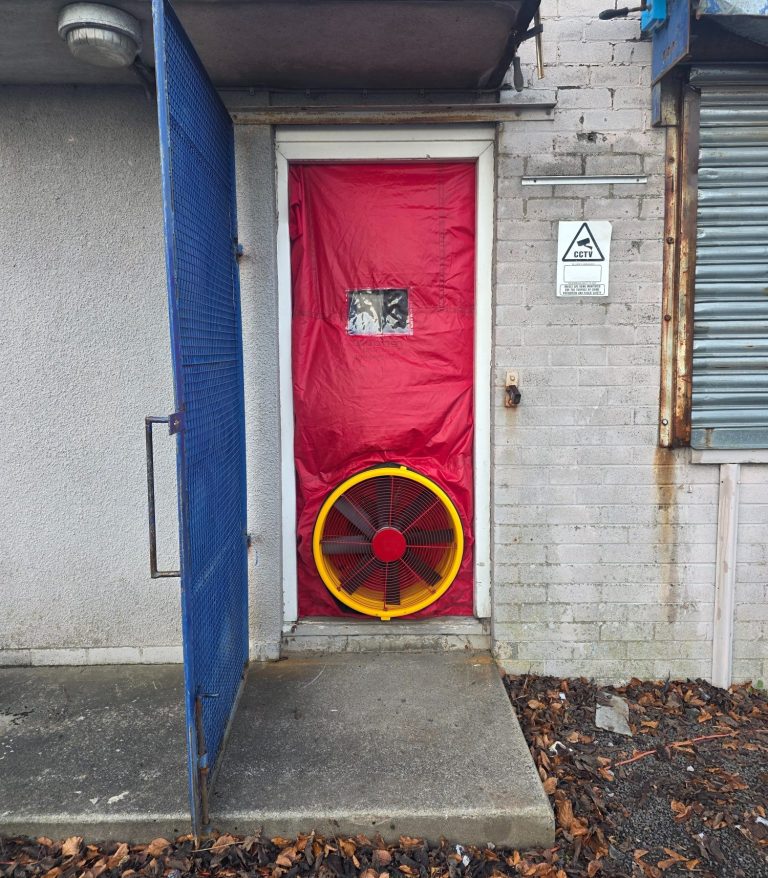
What is Air Tightness Testing?
Blower Doors
Air tightness testing in Scotland is a mandatory procedure for almost all new buildings to ensure energy efficiency and compliance with the stringent Section 6 (Energy) of the Scottish Building Standards. The process, often called air permeability or air pressure testing, measures uncontrolled airflow (draughts) through gaps and cracks in the building's fabric.
The Purpose
The primary goal is to "build tight – ventilate right". Reducing uncontrolled air leakage helps to:
- Minimise heat loss, leading to reduced energy consumption and lower heating bills.
- Improve occupant comfort by eliminating draughts and maintaining stable indoor temperatures.
- Lower carbon dioxide emissions, supporting Scotland's climate change targets.
- Ensure the building's performance aligns with its design-stage energy calculations (SAP for domestic, SBEM for commercial).
The Process (Blower Door Test)
The test is performed by a certified, accredited engineer from a government-recognised competent persons scheme (such as the ATTMA or IATS). The standard procedure (BS EN 13829, CIBSE TM23 methodology) is as follows:
- Preparation: The building is prepared by closing all external windows and doors, opening all internal doors, turning off combustion appliances, and temporarily sealing intentional ventilation points like extractor fans and trickle vents. Drainage traps must contain water to form a seal.
- Equipment Setup: A specialised piece of equipment called a "blower door," which includes a calibrated fan and a flexible frame, is installed in an external doorway.
- Testing: The fan is used to either pressurise or depressurise the building to create a pressure difference of 50 Pascals (Pa) between the inside and outside.
- Measurement: The amount of airflow required to maintain this pressure difference is measured using calibrated instruments. Multiple readings are taken at various pressures to ensure accuracy.
- Results and Certification: The result is calculated as the air permeability rate, expressed in cubic metres per hour per square metre of the building's envelope area @ 50 Pa). A certificate is issued upon successful completion.
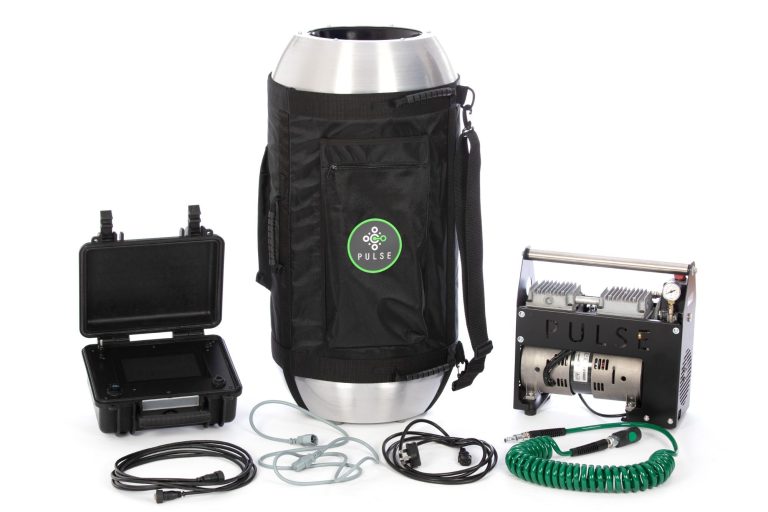
Pulse Testing
Pulse air tightness testing in Scotland is a modern, efficient method to measure a building's air leakage, crucial for meeting Scottish Building Standards and energy efficiency goals by using compressed air pulses to detect leaks, allowing occupants to stay in the building during testing, and is approved under CIBSE TM23 for new builds and retrofits. It's a less disruptive alternative to blower door tests, identifying air permeability to ensure adequate ventilation and better energy performance, with providers across Scotland offering these services.
How it Works
- Device Placement: A small, suitcase-sized device is placed inside the property, usually on the ground floor.
- Air Pulses: The device releases controlled pulses of air, creating a temporary pressure difference (around 4 Pascals) inside the building.
- Measurement: Sensors monitor the building's response, measuring how quickly the pressure changes, which indicates air leakage.
- Data & Reporting: Results are quickly available on the device, with data uploaded for a PDF report, often instantly.